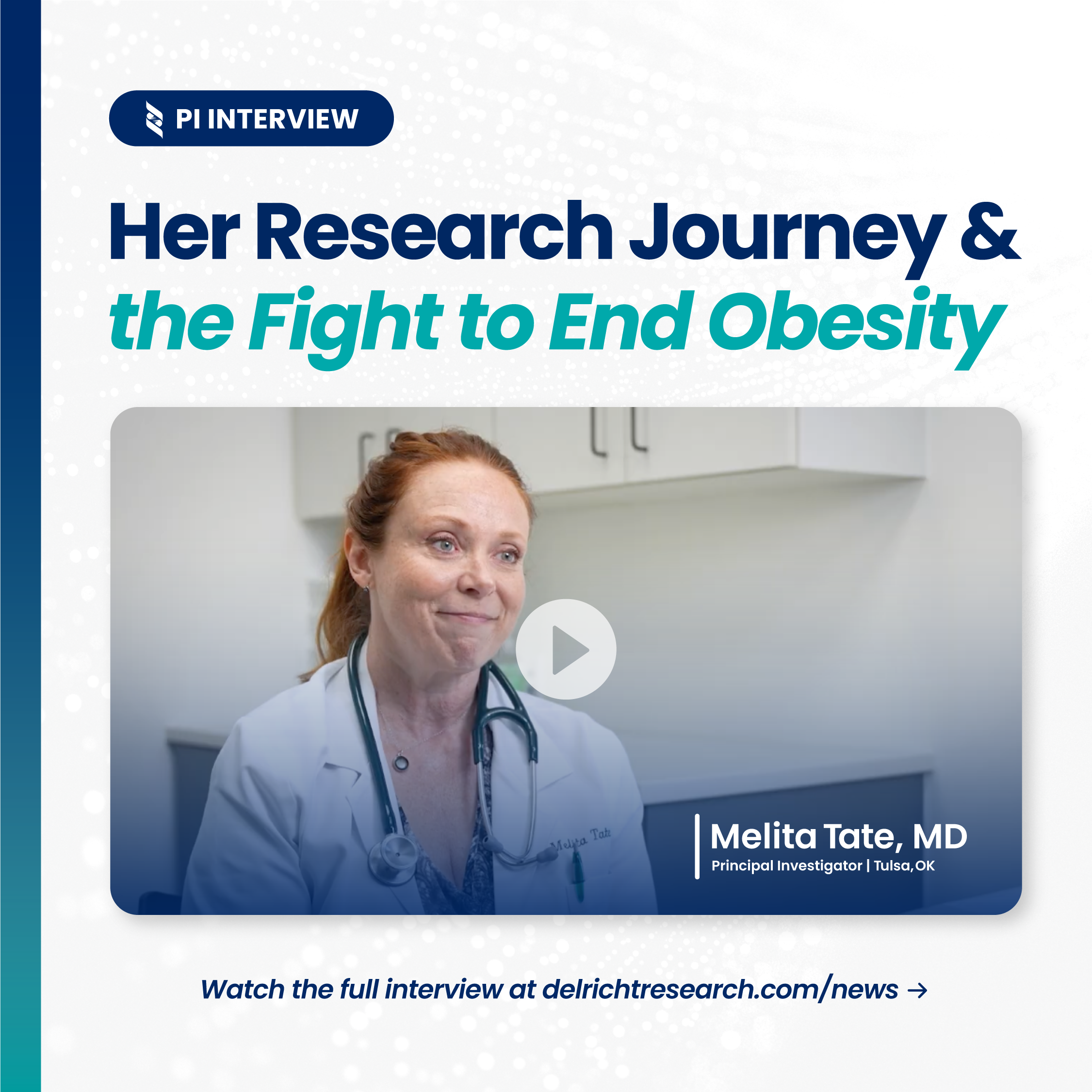
Dr. Melita Tate on Her Research Journey and the Fight to End Obesity
Dr. Melita Tate on Her Research Journey and the Fight to End Obesity
Every January, Dr. Melita Tate sits down with a blank planner and gives herself ninety seconds to answer “The Three Most Important Questions.”
– What do I want to experience?
– How do I want to grow?
– What do I want to contribute?
A few years ago, in one of those brainstorming sessions, she wrote four words in answer to that last question, four words that would come to define the next chapter of her career: End Obesity in Oklahoma. She wasn’t sure yet how the goal would take shape. But she was set on changing the narrative around the Midwest’s reputation as one of the most unfit, unhealthy regions in the country.
As a primary care physician building a small practice in Tulsa, she wasn’t looking for a second career. But a chance meeting with a research team back in 2011, and a follow-up call a couple of years later once her clinic had outgrown its walls, opened a door she hadn’t known was there, leading her to conduct her first study. Ten years and countless protocols later, research has become inseparable from the way she practices medicine at Grassroots Healthcare.
The transition wasn’t seamless. Balancing a full patient load with the rigor of clinical trials meant real growing pains, and Dr. Tate wasn’t initially sure research was something she’d stick with. What changed her mind was seeing it work, in the outcomes her patients achieved, and in the practice she was building around them. Investigator meetings put her in rooms with specialists chasing approval for drugs they’d already seen transform lives, and their conviction was contagious. Somewhere along the way, she found herself just as invested.
That investment shows up most clearly in her approach to obesity and metabolic disease. She believes it’s at the root of far more of her patients’ suffering than conventional medicine once assumed. For years, she says, the standard of care began and ended with “calories in, calories out.” Her research has convinced her the truth is more complicated, and more solvable. When an obesity study landed at her clinic not long after that planner entry, she saw firsthand what access can do: patients who would never have found their way through her doors, finally given real hope for change. It is why, when a treatment does work, coming off a blood pressure or diabetes medication means more than fewer pills. To her patients, she says, it feels like a triumph, like they’re finally getting well. As she puts it: “What really is the most rewarding is whenever you get to help the patients, and you see that it changes their lives.”
“What really is the most rewarding is whenever you get to help the patients, and you see that it changes their lives.” – Dr. Melita Tate, Principal Investigator at DelRicht Research
Dr. Tate believes endocrinology will play a huge role in patients’ health and well-being going forward. She’s watched specialty fields increasingly overlap in the medications they use to treat completely different conditions, a pattern she says is leading researchers down the path to root causes rather than just symptoms. Oklahoma has long been seen as one of the country’s least healthy states. Dr. Tate believes this research could help change that. If these trials succeed, she says, patients across the region will see real improvements in their health.
Ask Dr. Tate what moving medicine forward actually looks like, and she doesn’t point to a breakthrough drug or a headline statistic. She points to her community, to patients who now have access to care they never would have had otherwise. She points to something simpler, too: watching a goal she once wrote down in ninety seconds become real in front of her. “I just couldn’t have made that happen,” she says. “It feels magical to me.” Ten years in, that feeling hasn’t faded. It’s the reason she keeps going.
All News