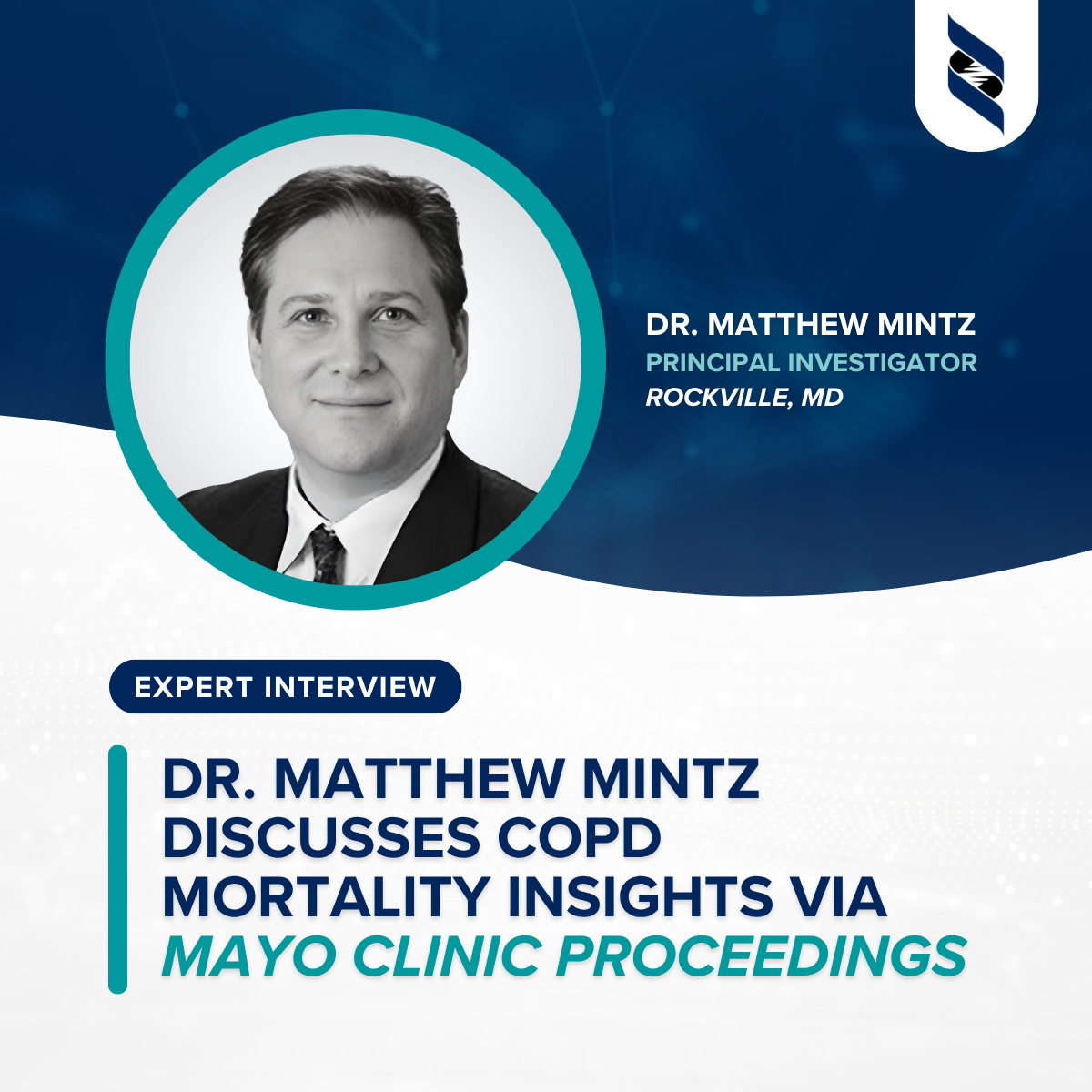
Reducing Mortality in COPD: Dr. Matthew Mintz Highlights the Life-Saving Role of Pharmacotherapy
Reducing Mortality in COPD: Dr. Matthew Mintz Highlights the Life-Saving Role of Pharmacotherapy
Chronic Obstructive Pulmonary Disease (COPD) remains the fifth leading cause of death in the United States, yet until recently, most pharmacologic therapies were viewed solely as symptom management tools. In a recent narrative review published in Mayo Clinic Proceedings, Dr. Matthew Mintz, a Clinical Associate Professor of Medicine at The George Washington University School of Medicine and practicing internist in Bethesda, MD, offers new hope: certain inhaled therapies may actually reduce the risk of death in COPD patients.
The Link Between Exacerbations and Mortality
Dr. Mintz’s contributions to the article, “Reducing the Risk of Mortality in Chronic Obstructive Pulmonary Disease with Pharmacotherapy,” synthesizes recent research findings, including large-scale studies such as the IMPACT and ETHOS trials. These trials demonstrated that triple therapy, an inhaled corticosteroid (ICS), a long-acting beta agonist (LABA), and a long-acting muscarinic antagonist (LAMA), can significantly reduce mortality in patients with moderate to severe COPD and a history of exacerbations.
The underlying mechanism? A reduction in exacerbations, which are closely tied to increased risk of hospitalization and death. Among the three components, the inhaled corticosteroid appears to contribute most to the survival benefit.
Putting the Findings Into Context
As both a primary care physician and researcher, Dr. Mintz emphasizes the importance of viewing COPD treatment within the broader scope of life-saving primary care interventions. He explains that the “number needed to treat” (NNT), the number of patients who must be treated to prevent one death, ranges from 105 to 147 for COPD triple therapy. That’s significantly better than common interventions like treating high cholesterol or hypertension, which have higher NNTs.
This perspective underscores a vital message: effective COPD treatment is not just about improving breathing; it’s a potentially life-saving intervention on par with some of the most routine practices in primary care.
Implications for Patients and Providers
For patients, the takeaway is simple yet powerful: if you have moderate to severe COPD and a history of exacerbations, combination inhaled therapy could do more than ease symptoms, it could save your life. If your current regimen includes only bronchodilators without an inhaled steroid, it may be time to discuss adding triple therapy with your provider.
For providers, especially those in primary care, this review serves as a call to action. Ensuring that appropriate patients are offered triple therapy could meaningfully impact survival rates. And while more large-scale, mortality-powered trials are needed to strengthen the evidence base, current data provide a compelling foundation for practice change.
Watch the Full Interview
To hear Dr. Mintz explain the findings in his own words, watch the full video interview hosted by Mayo Clinic Proceedings.
At DelRicht Research, we remain committed to advancing medical knowledge through the power of clinical research. We celebrate contributors and principal investigators like Dr. Matthew Mintz, who are helping reshape the standard of care and improving lives through evidence-driven insights.
All News